Because the Earth deserves a fair trial.
A network of jurists and scientists integrating scientific evidence into environmental litigation

Whistleblower
If you have verified information about corporate actions harming the environment, share it with our network to support legal action.
Science–Law Network
Our network connects scientists and lawyers to turn complex environmental data into evidence that holds every contributor accountable.
Climate Litigation
We use the law to drive systemic change, challenging harmful practices, and making environmental protection a legal duty, not a choice.
Justice Gap
A legal system blind to complex living systems
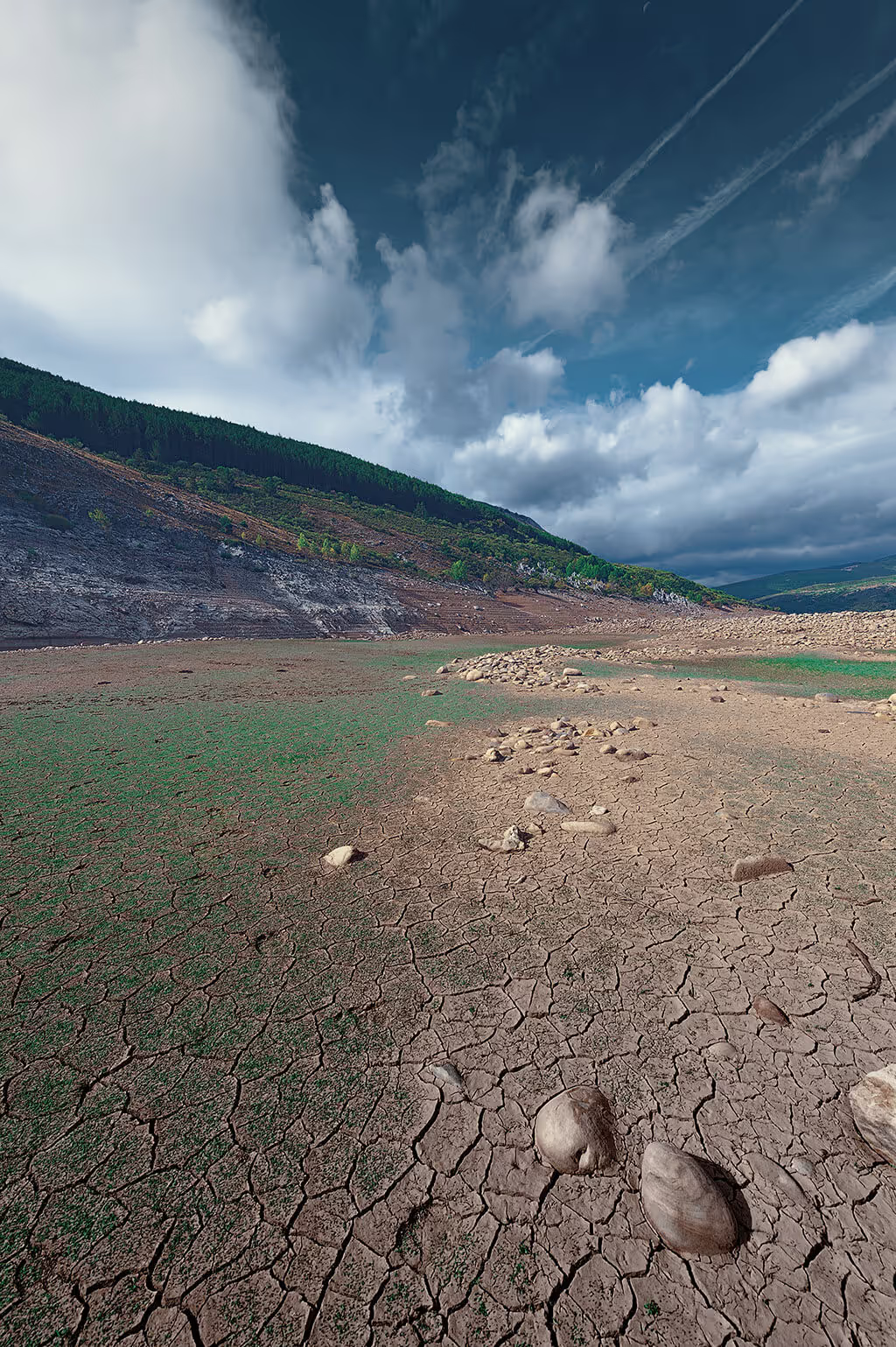


There’s a gap between the complex, interconnected reality of nature and the linear, reductionist logic of our laws.
Courts struggle to account for climate change, and when they do, justice often stops at compensation, leaving ecosystems and communities unrepaired.
Regenerative Law closes the gap, aligning the law with the living systems it was meant to protect.
Approach
Lawyers and scientists rethinking justice
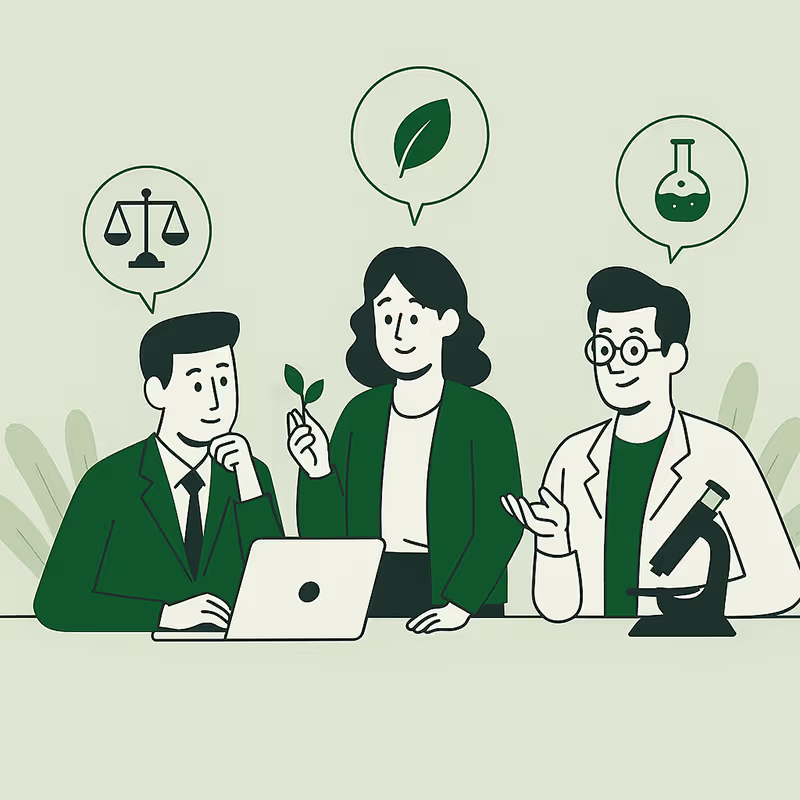


Interdisciplinary Collaboration
Bringing together experts in law, ecology, and environmental science is essential to create legal systems that truly protect people and the planet. By combining scientific insight with legal expertise, we can better understand and address environmental causality.
Integrity and Independence
Our network operates with complete integrity, ensuring that every case, tip, and analysis is guided solely by evidence, science, and the pursuit of justice. Members are empowered to act without pressure from external agendas.
Innovative Thinking
We embrace forward-thinking strategies that go beyond traditional legal frameworks. From applying the latest scientific methods to reimagining how responsibility is understood in courts, we champion solutions that are as dynamic and adaptive as the systems we aim to protect.
Educating
Regenerative
Thinkers
Institutional and Academic Partnerships
We collaborate with universities and research institutions to bring regenerative jurisprudence into education, research, and public debate.
Through lectures, academic programs, and interdisciplinary projects, we reshape the ways in which we understand law, ecology, and social sciences — empowering the next generation of thinkers to design fairer, more sustainable systems of justice.

Cases Files
Real Change. Real Cases.
The Landmark Case Against Shell in the Niger Delta
For decades, communities in the Niger Delta have lived with the consequences of oil and gas extraction. In 2005, Gbemre, representing the Iwherekan community, challenged both the Nigerian government and Shell Petroleum Development Company over the practice of gas flaring, which had been ongoing for decades.
How FON Fought for Renewable Energy
In China, the push for renewable energy has sometimes clashed with the realities of energy distribution. In 2017, the Friends of Nature Institute (FON) raised a legal challenge against Gansu State Grid, the state-owned company responsible for electricity distribution in Gansu Province. The issue: wind and solar power were being generated but not fully connected to the grid, leading to unnecessary greenhouse gas emissions from coal-fired power.
How Communities Took on Shell
On South Africa’s Eastern Cape coast, local communities rely on their ocean for healing, fishing, and other cultural practices. That delicate balance was threatened when Shell announced plans to undertake a 3D seismic survey to search for oil and gas.
The Landmark Case Against Shell in the Niger Delta
For decades, communities in the Niger Delta have lived with the consequences of oil and gas extraction. In 2005, Gbemre, representing the Iwherekan community, challenged both the Nigerian government and Shell Petroleum Development Company over the practice of gas flaring, which had been ongoing for decades.
The Problem
Gas flaring from oil and gas operations posed serious environmental and health risks. The community argued that Shell failed to consider the impact of its activities on local livelihoods, survival, and well-being. Beyond immediate pollution, gas flaring contributed to climate change and violated the community’s rights to life and human dignity, as guaranteed by the 1999 Nigerian Constitution (Sections 33 and 34) and reinforced by the African Charter on Human and Peoples’ Rights.
The Battle
The case was brought to the Federal High Court of Nigeria, seeking to hold both the government and Shell accountable for decades of flaring. The applicant argued that the continued gas flaring violated fundamental rights and that Shell had failed to conduct a required Environmental Impact Assessment (EIA), in clear violation of Nigerian law.
The Result
The Federal High Court ruled in favor of the applicant. The judge held that the community’s rights to a clean, pollution-free environment are constitutionally guaranteed. The court found that Shell’s gas flaring and failure to conduct an EIA violated these rights, and ordered immediate steps to stop gas flaring in the community.
The court also directed the Attorney General of Nigeria to amend the Associated Gas Re-injection Act to align with Nigeria’s human rights obligations under the Constitution and the African Charter. No damages, costs, or compensation were awarded.
Why It Matters
This landmark case established that the right to a clean and healthy environment is part of Nigeria’s constitutional protections. It also set an important precedent for holding both corporations and governments accountable for environmental harm and human rights violations. The ruling reinforced that energy development must respect community rights, human dignity, and environmental protection.
How FON Fought for Renewable Energy
In China, the push for renewable energy has sometimes clashed with the realities of energy distribution. In 2017, the Friends of Nature Institute (FON) raised a legal challenge against Gansu State Grid, the state-owned company responsible for electricity distribution in Gansu Province. The issue: wind and solar power were being generated but not fully connected to the grid, leading to unnecessary greenhouse gas emissions from coal-fired power.
The Problem
Gansu State Grid had purchased electricity from renewable sources, but much of it was not fed into the grid. Under China’s Renewable Energy Law, grid companies are required to purchase electricity from renewable sources and provide connection services. FON argued that the grid’s high rate of curtailment of wind and solar energy violated these provisions and contributed to avoidable greenhouse gas emissions.
The company, however, argued that it had no legal duty to put all purchased renewable electricity onto the grid, citing a strict interpretation of the law. FON countered that this interpretation ignored the broader environmental consequences and the law’s intent to promote clean energy.
The Battle
On June 6, 2017, FON sued Gansu State Grid in the Lanzhou Intermediate People’s Court. The court rejected the claim on procedural grounds, stating that the grid company’s role in acquiring and distributing electricity did not directly cause pollution or environmental harm.
FON appealed to the High Court of Gansu Province, which on December 28, 2018, overturned the lower court’s decision. The High Court held that the case was procedurally valid and sent it back to the Gansu Mining Area Intermediate Court for a hearing on the merits.
The case moved slowly, in part due to Covid-19 travel restrictions, with judges holding discussions but taking no further immediate action.
The Result
After years of delays, the parties reached a mediation agreement on April 10, 2023. Under the agreement:
- Gansu State Grid would invest 1.98 billion CNY initially, followed by at least 913 million CNY, to ensure renewable electricity is connected to the grid before 2025.
- The company would submit annual reports to the Gansu Mining District People’s Court, which would also be shared with FON.
- Gansu State Grid would disclose information about clean energy consumption to allow public supervision.
Why It Matters
This case highlights the challenges of implementing renewable energy in practice, even when laws exist to promote clean energy. It demonstrates that legal action and oversight can push large, state-owned companies to meet environmental responsibilities.
By securing a binding commitment to connect renewable electricity to the grid, FON ensured that more clean energy will be used, reducing reliance on coal and helping lower greenhouse gas emissions. The case also sets an important precedent for civil society engagement in enforcing renewable energy laws in China.
How Communities Took on Shell
On South Africa’s Eastern Cape coast, local communities rely on their ocean for healing, fishing, and other cultural practices. That delicate balance was threatened when Shell announced plans to undertake a 3D seismic survey to search for oil and gas.
The Problem
The planned survey by Shell and Impact Africa raised concerns. It could impact marine life, harm coastal ecosystems, and interfere with the cultural rights of local communities. On top of that, the exploration rights were given without proper consultation, creating a dialogue about constitutional violations and the wider climate effects of digging for fossil fuels.
The Battle
In response, four organizations — Sustaining the Wild Coast NPC, Mashona Dlamini, Dwesa-Cwebe Communal Property Association, and others — filed an urgent application in the High Court to stop the survey. They argued that proceeding would cause irreparable harm to both communities and the environment.
On December 28, 2021, the High Court granted an interim interdict, agreeing that the exploration right had been awarded without proper consultation. The court noted that the survey could negatively affect climate change, cultural practices, ocean conservation, and the sustainable use of marine resources.
In September 2022, the High Court went further and set aside the exploration right entirely, highlighting that authorities had failed to consider environmental and climate impacts and their responsibility to protect coastal public property for future generations.
Shell and Impact Africa appealed. In June 2024, the Supreme Court of Appeal confirmed that the exploration right had been granted unlawfully but suspended its invalidation, allowing Shell to reapply for the right.
In August 2024, the case reached the Constitutional Court, which granted the environmental groups leave to appeal. The court will now determine whether the Supreme Court’s compromise aligns with constitutional principles.
The Result
So far, the legal actions have halted Shell’s seismic survey and challenged the lawfulness of the exploration right. The High Court and Supreme Court of Appeal rulings underline that proper consultation, environmental protection, and climate considerations are essential when granting exploration rights.
The Constitutional Court’s final decision is still pending.
Why It Matters
This case highlights the critical link between community rights, environmental protection, and climate accountability. It shows that legal action can hold both governments and corporations accountable when their decisions threaten ecosystems and local livelihoods. It also sets an important precedent for future environmental and human rights cases, emphasizing that exploration and extraction activities must respect constitutional rights and South Africa’s climate commitments.